Stepping through the portal
Stepping through the portal
By PORTALTO Editor
6 October 2025
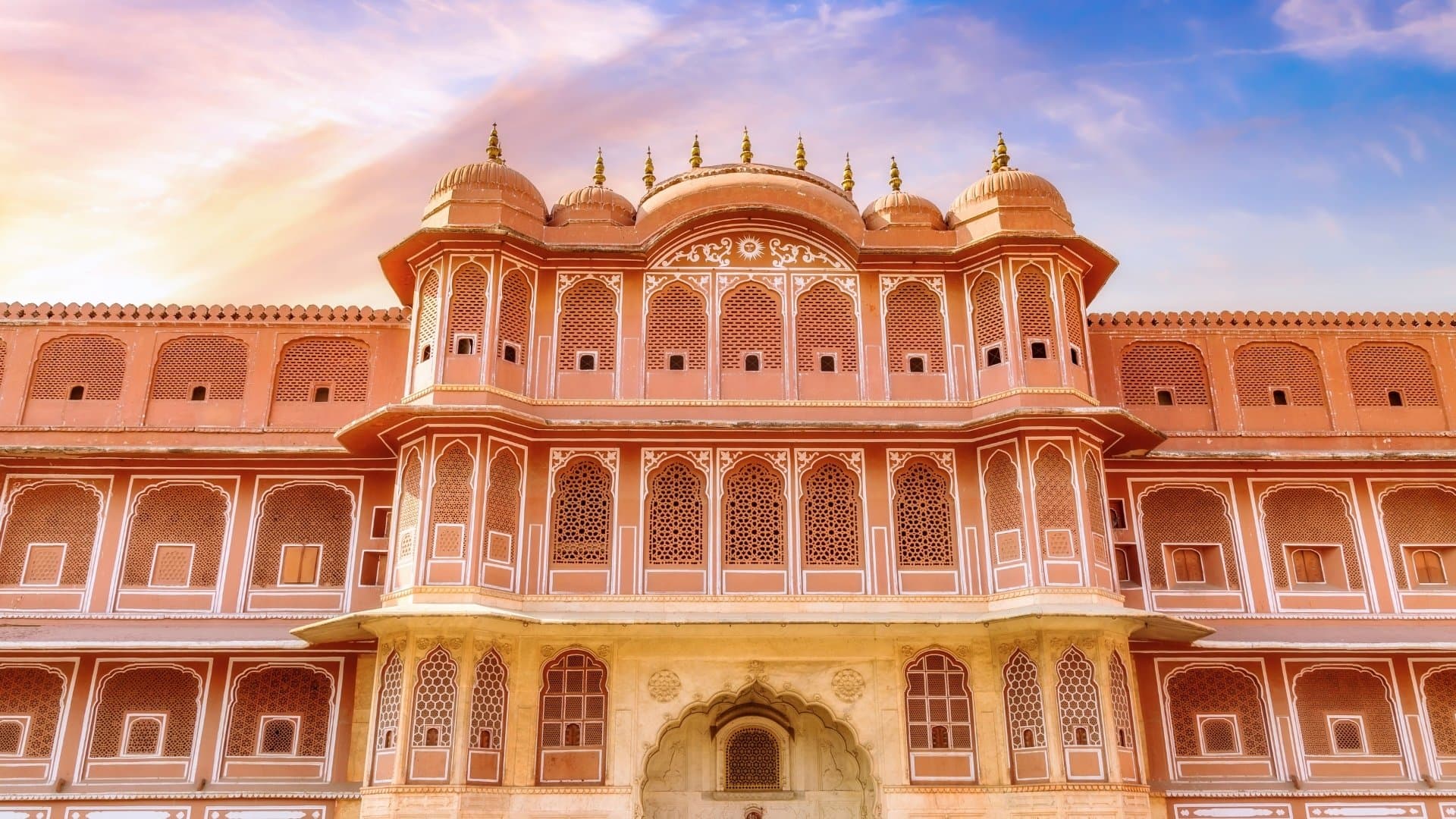
Jaipur is not just another city on the traveler’s map, it’s a city that feels like it’s been directed. Its pastel pink facades, pastel archways, and meticulous symmetry echo the visual world of Wes Anderson India, where every corner looks framed, every detail deliberate. Walk through its streets and you’ll find it enchanting just like a scene that could have been lifted straight from a storyboard: markets bursting with saturated colors, palaces washed in morning gold, and lakes reflecting domes with the precision of a still-life painting.
Like the inside of Anderson film, Jaipur architecture balances whimsy with gravity. There’s the ornate fantasy of Hawa Mahal’s, but also the quiet geometry of Jantar Mantar’s instruments charting the stars. There’s the maximalism of Patrika Gate, painted in kaleidoscopic arches, contrasted by the serene minimalism of Jal Mahal, floating in its silent lake. The city’s contrasts don’t clash at all, instead they play in harmony, much like Anderson’s knack for combining eccentric characters with melancholic undertones.
To capture Jaipur in a weekend gateway, you don’t just list its monuments. You might frame them like acts in a film. Each landmark becomes a scene, each transition a cut. With the right pacing, the city reveals itself not as chaos but as cinema: pastel, poetic, and deeply human.
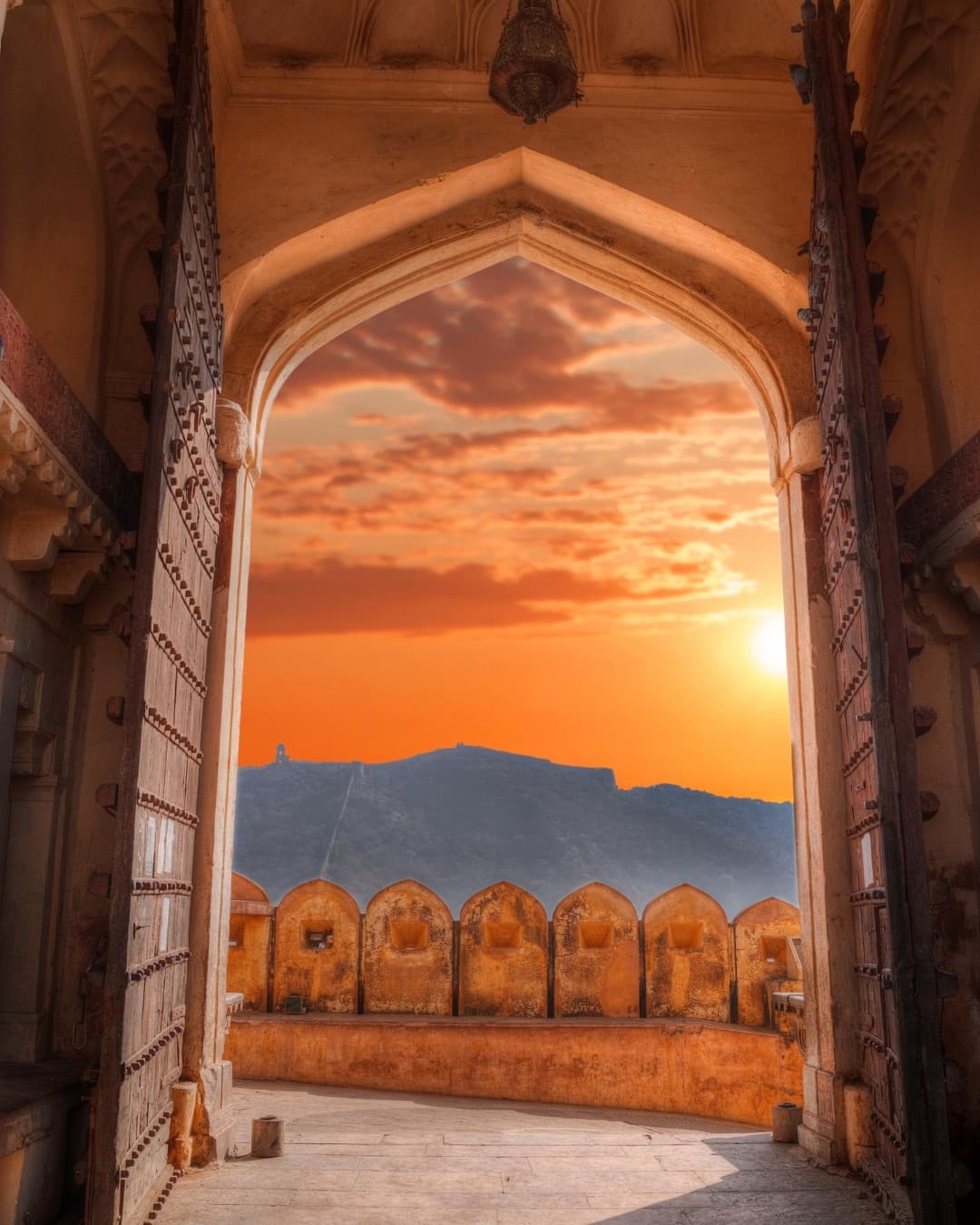
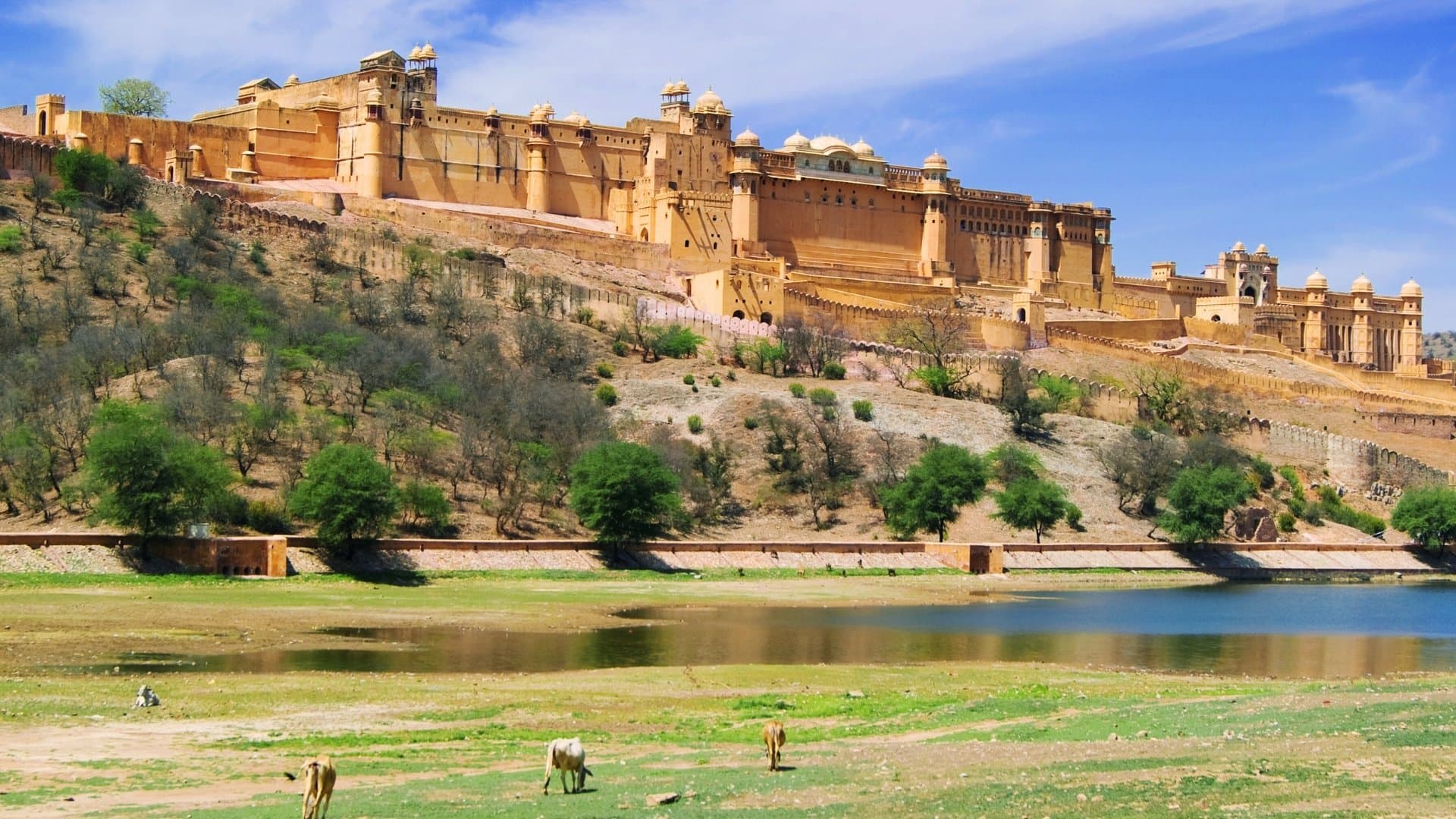
Amber Fort Sunset View
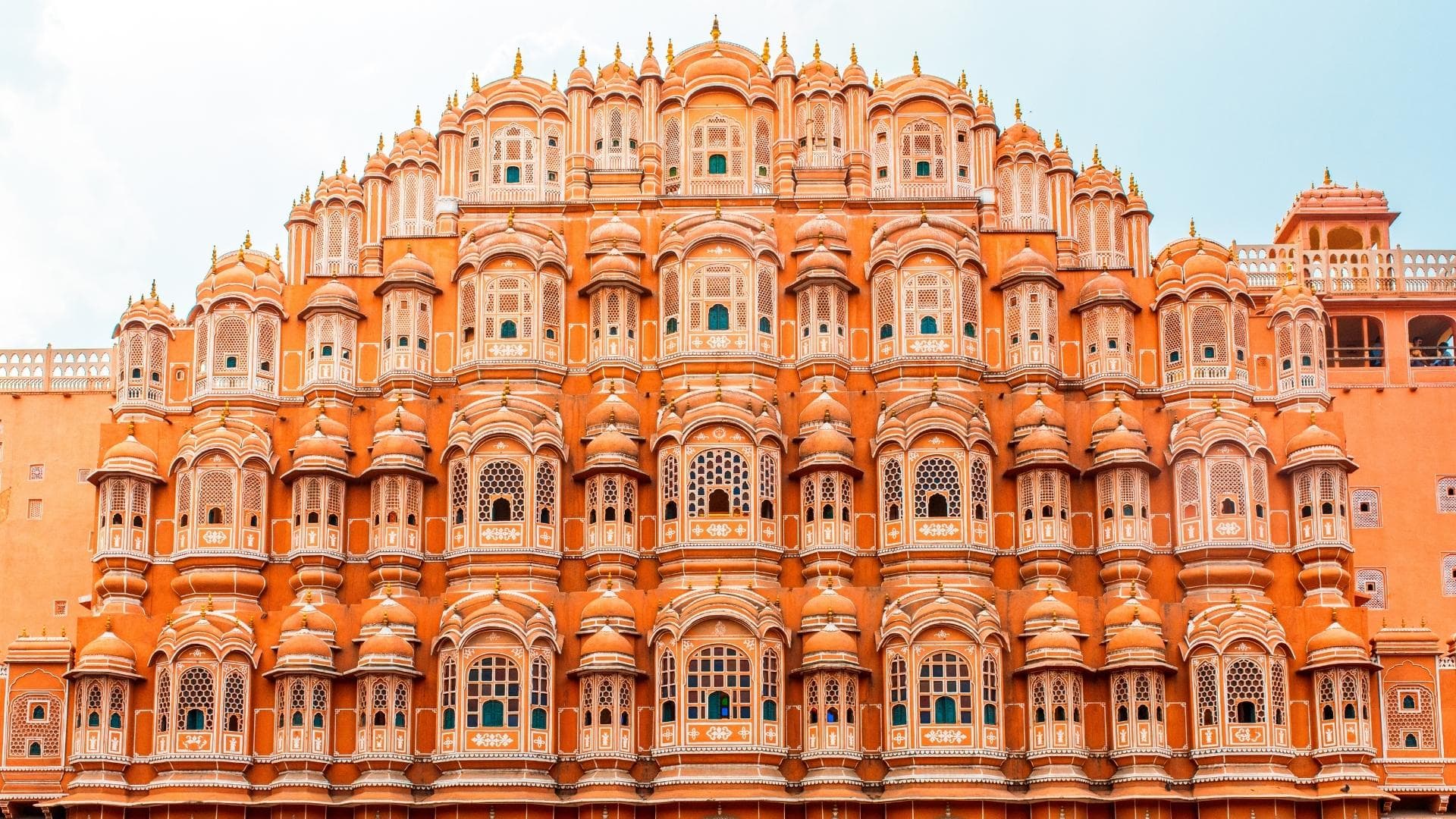
Start your first morning at the Hawa Mahal, the Palace of Winds, Jaipur’s most recognizable face. Arrive early — the street is still waking up, and the morning light makes the pink sandstone façade glow like soft coral. With its honeycomb lattice of 953 windows, the palace feels less like stone and more like lace carved from air. This isn’t a place to rush. Watch as women carrying baskets pass below, rickshaws weave past, and the city slowly stretches awake. It sets the tone: ornate, delicate, and cinematic.
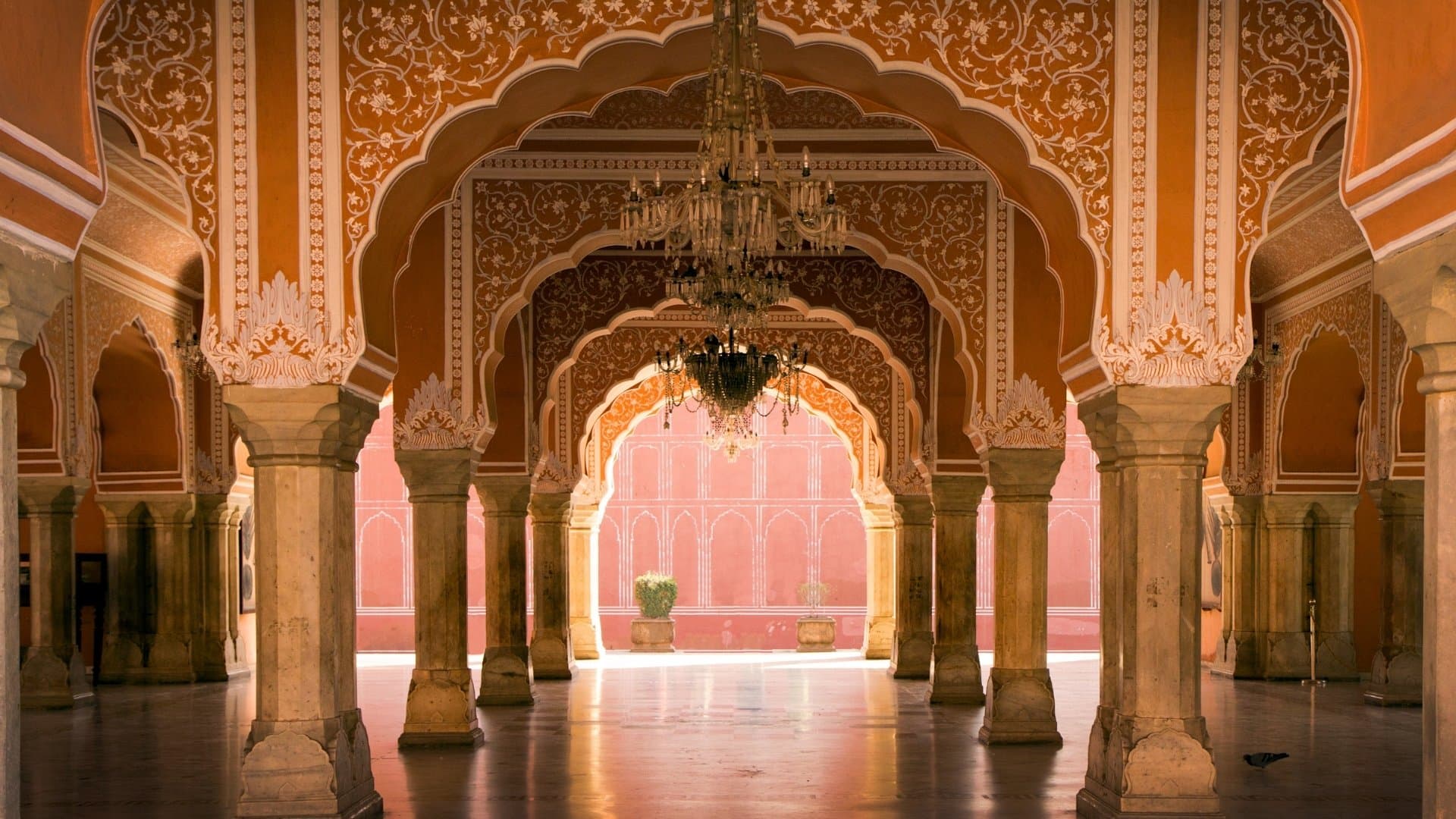
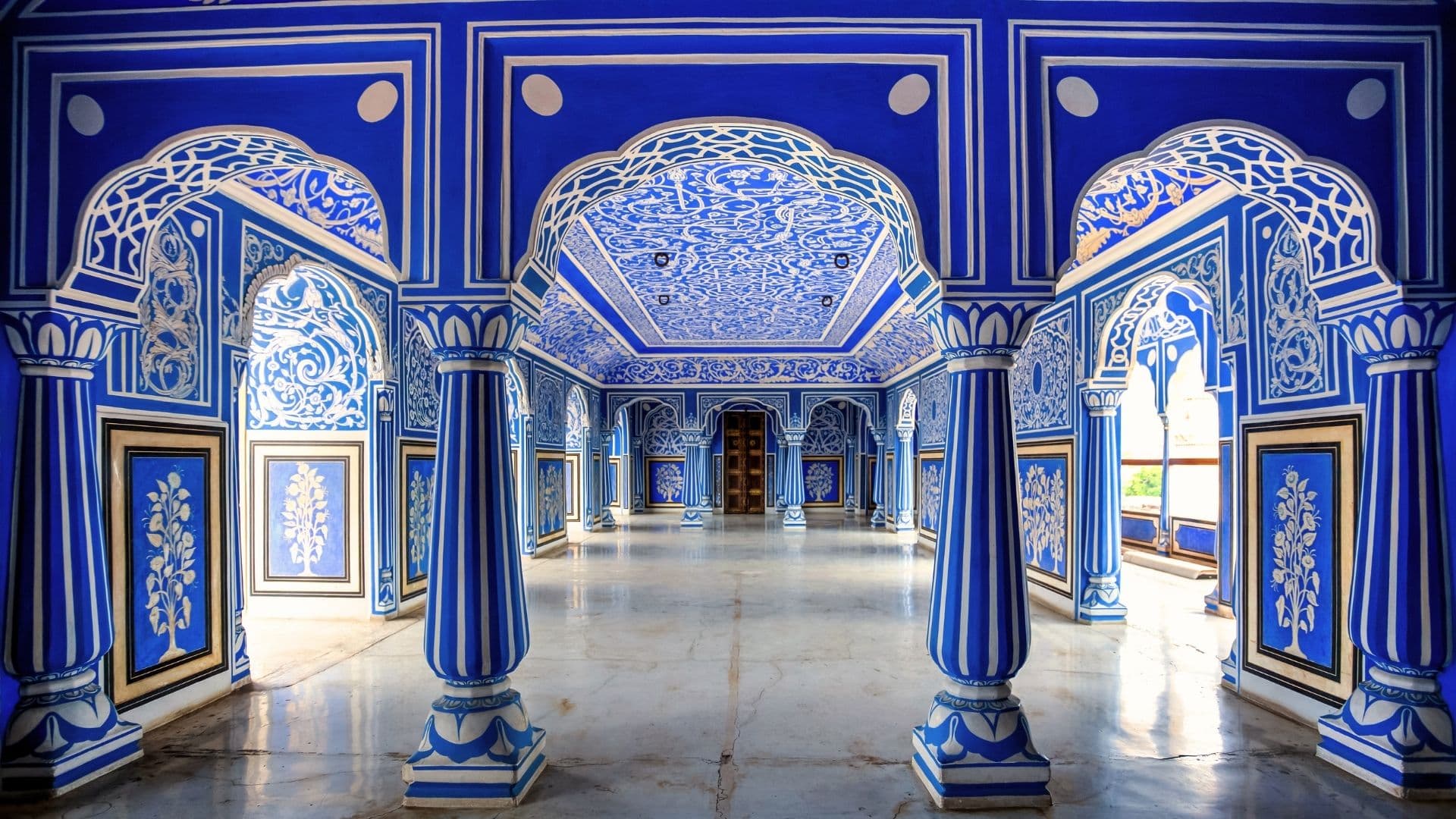
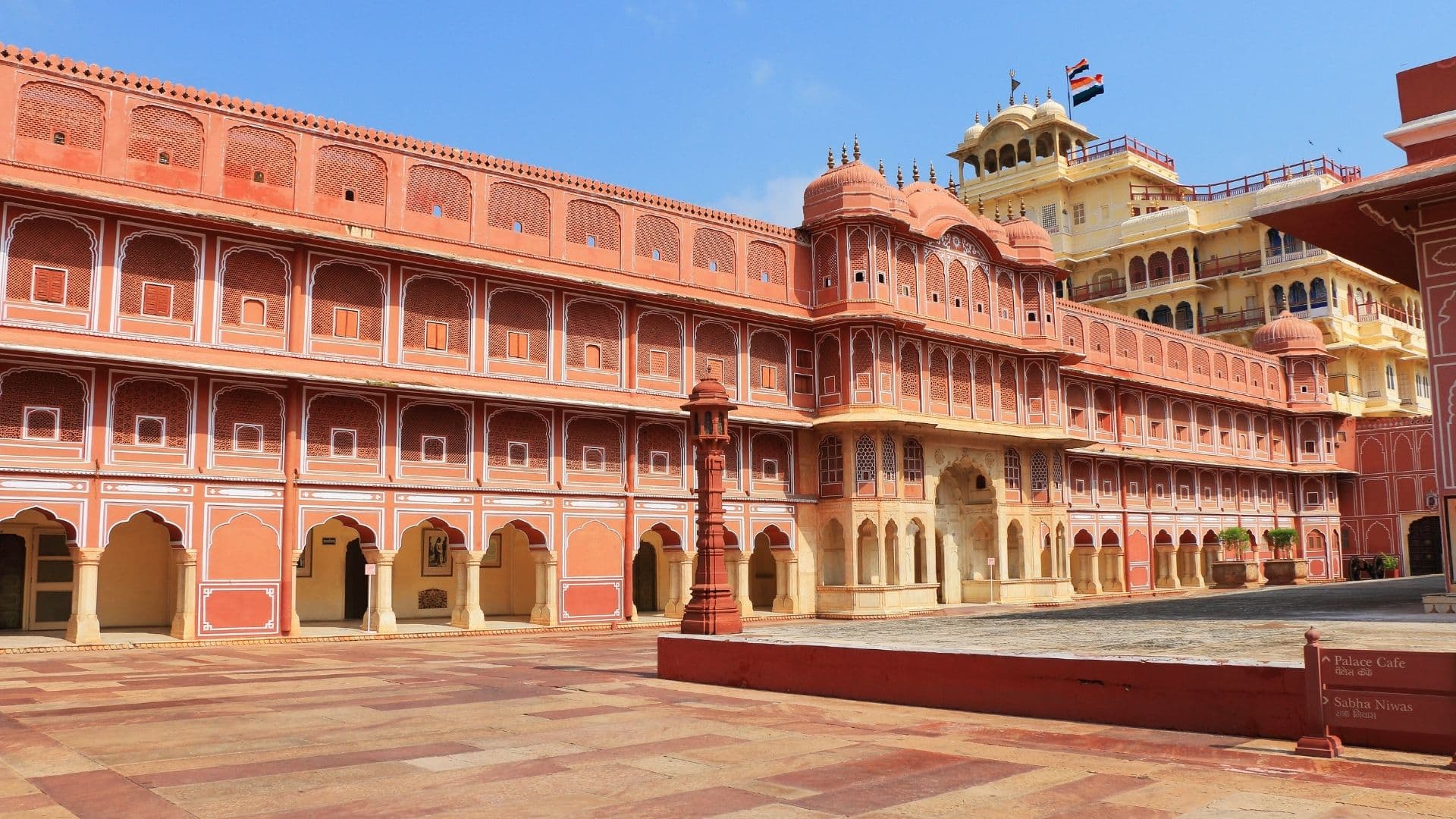
Just a short walk from Hawa Mahal is the City Palace, the beating heart of royal Jaipur architecture. Inside, the courtyards and gates present themselves like scenes carefully designed to be lingered upon. The Peacock Gate, painted with jewel-toned feathers, is among the most photographed spots in the city for good reason. Each detail feels deliberate, like a painter’s brushstroke.
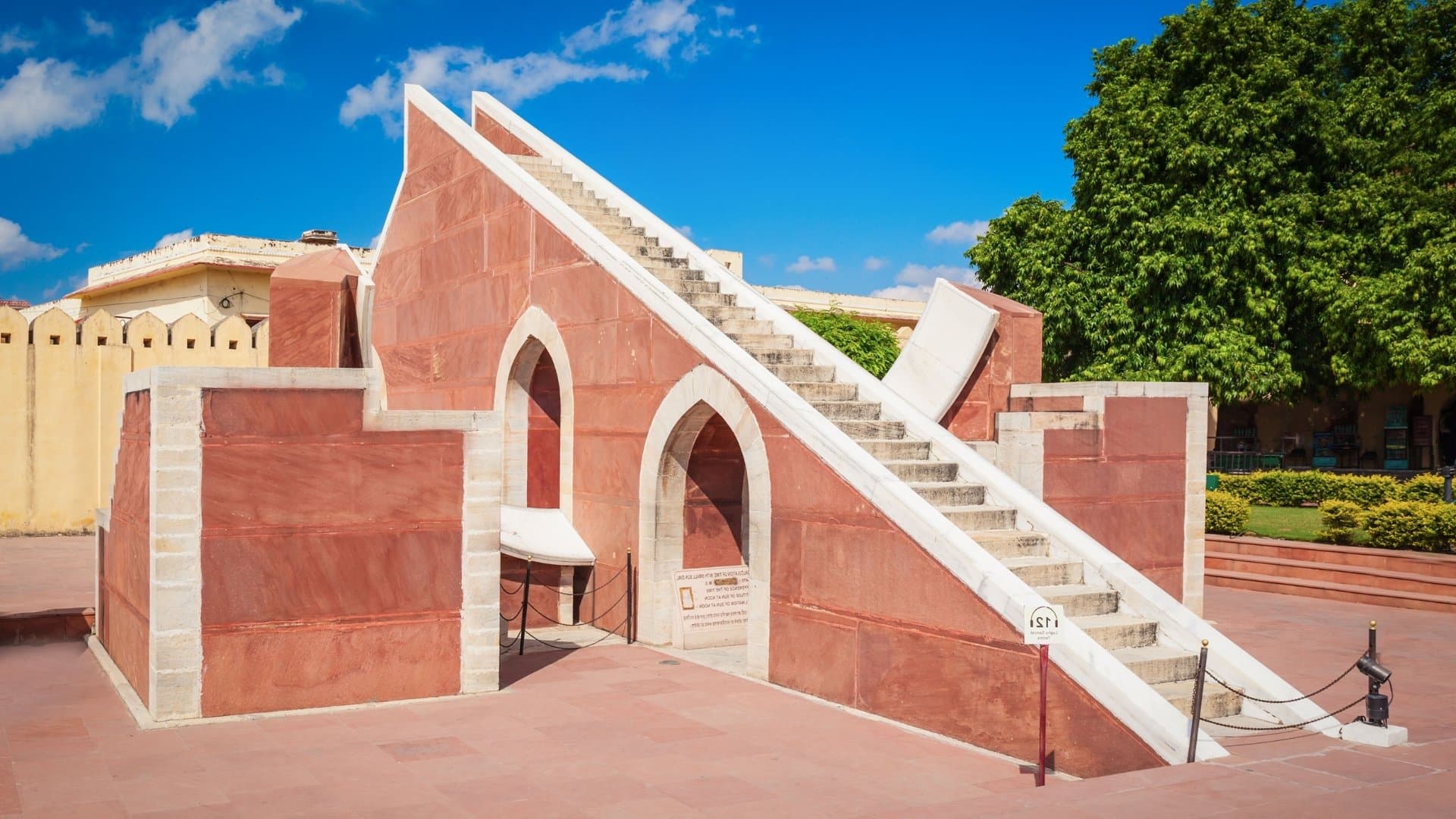
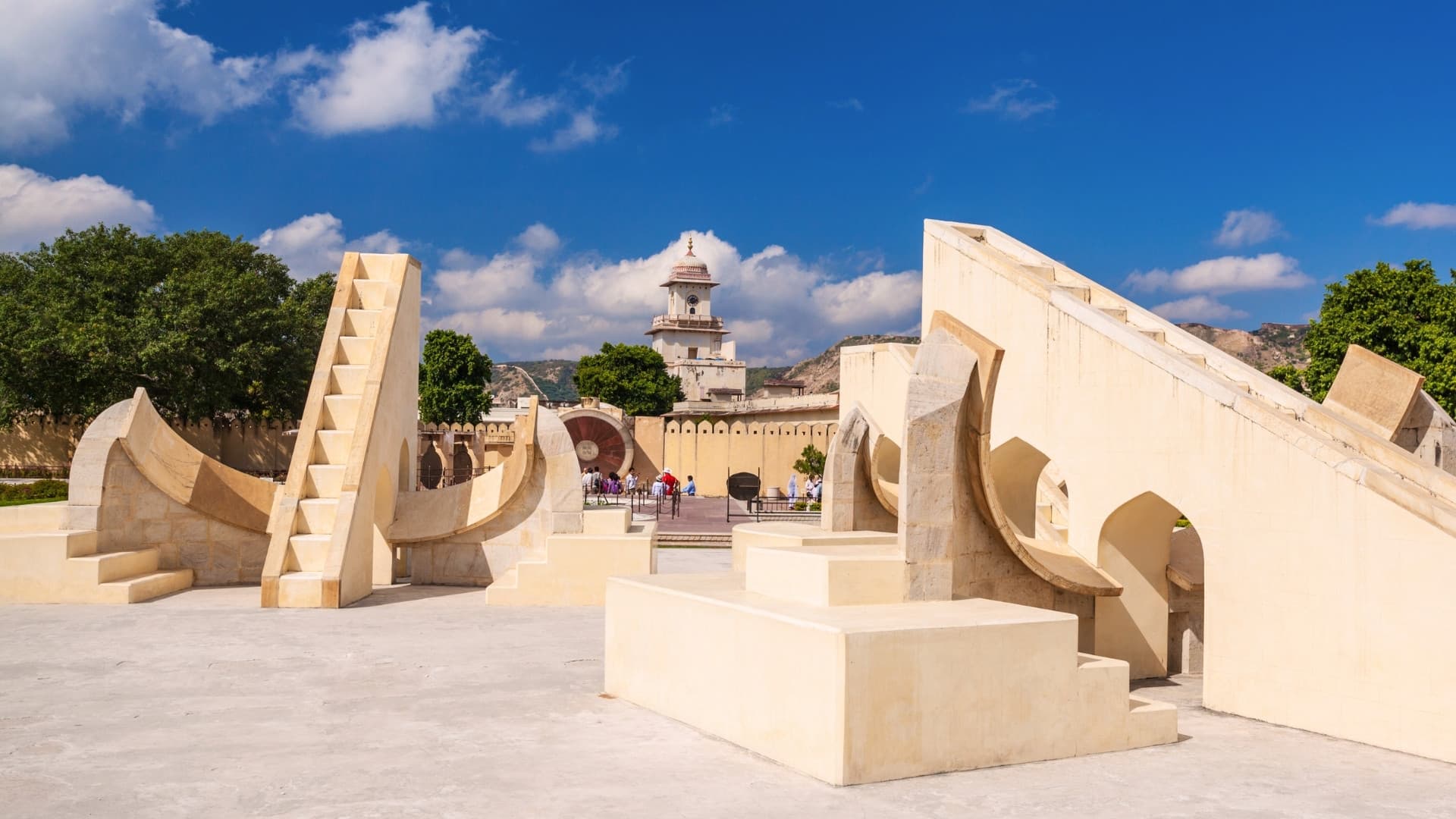
Step outside, and you’ll find a sharp tonal shift at Jantar Mantar, the astronomical observatory built in the 18th century. Here, towering geometric instruments slice the sky, their shadows marking celestial movements. After the ornate intricacy of the palace, Jantar Mantar’s clean lines and stark scale bring a new rhythm — one that feels modern, though centuries old.
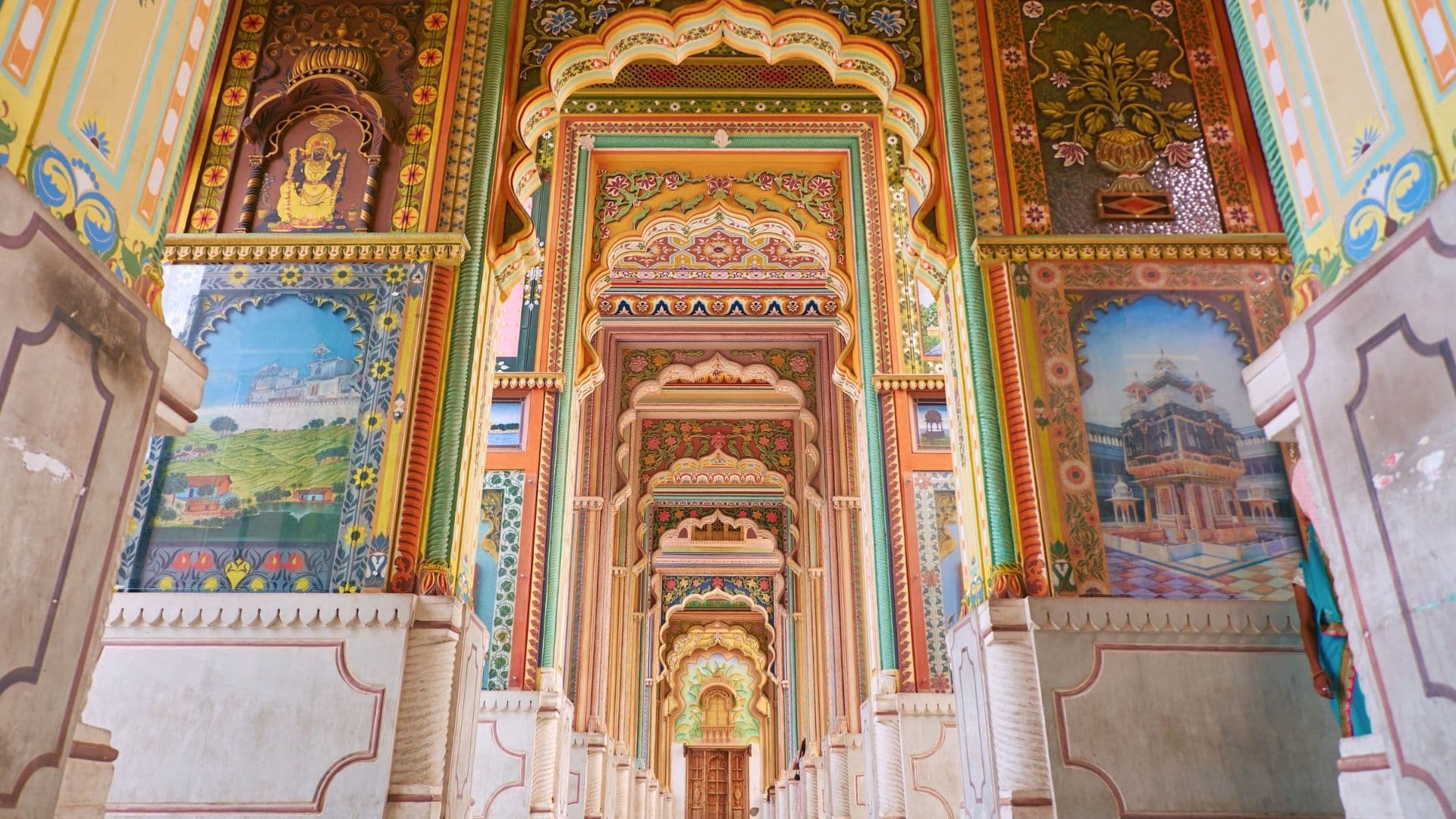
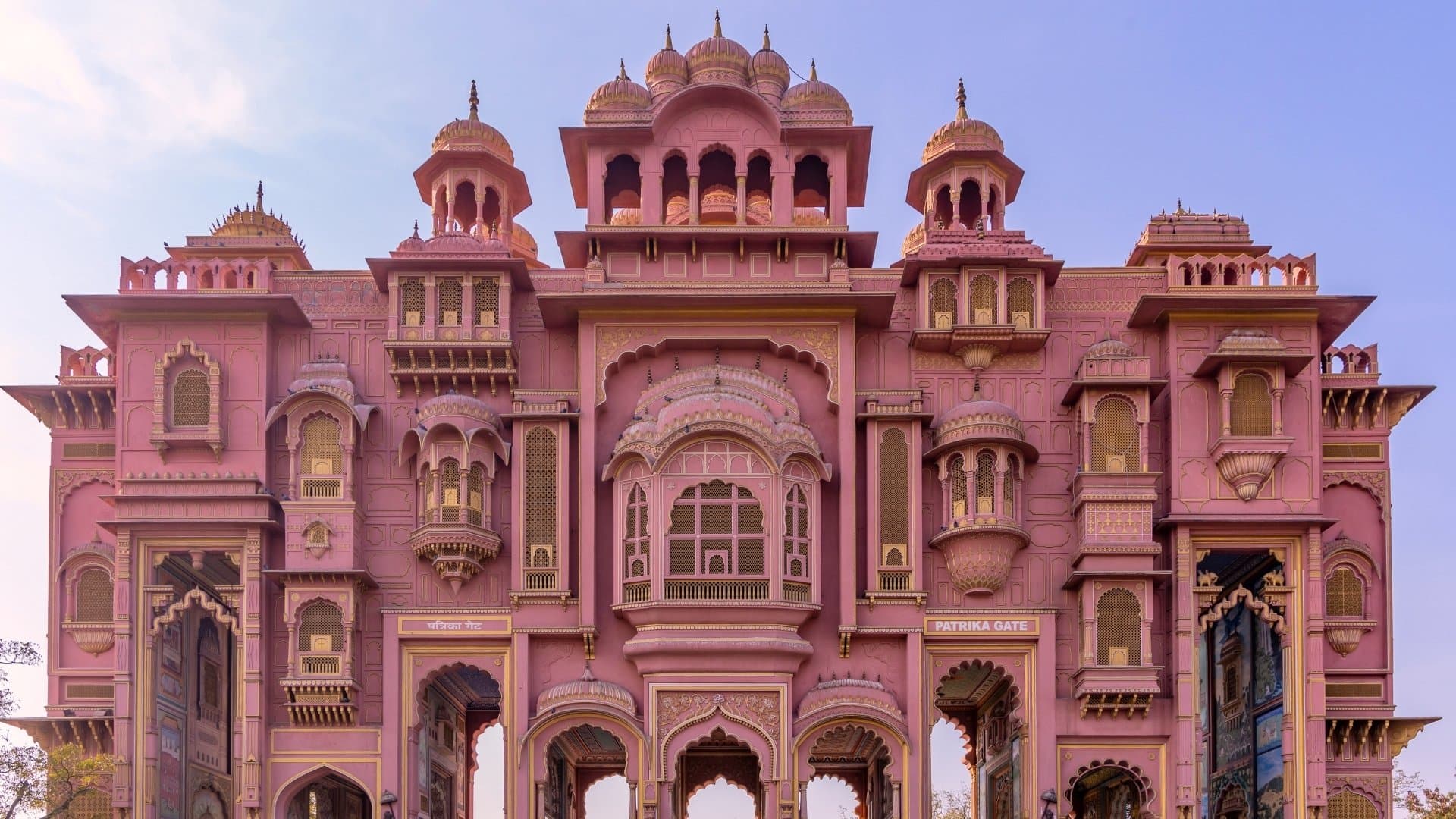
By late afternoon, make your way to Patrika Gate, a modern landmark that plays homage to Jaipur’s storytelling traditions. Each archway is drenched in murals depicting elephants, camels, and local folklore, creating a kaleidoscopic corridor of color. Stand in the center and spin slowly; everywhere you look, you’re surrounded by saturated hues. It’s a love letter to Rajasthan, painted in a style that feels both maximalist and meticulous — like walking into a hand-painted frame.
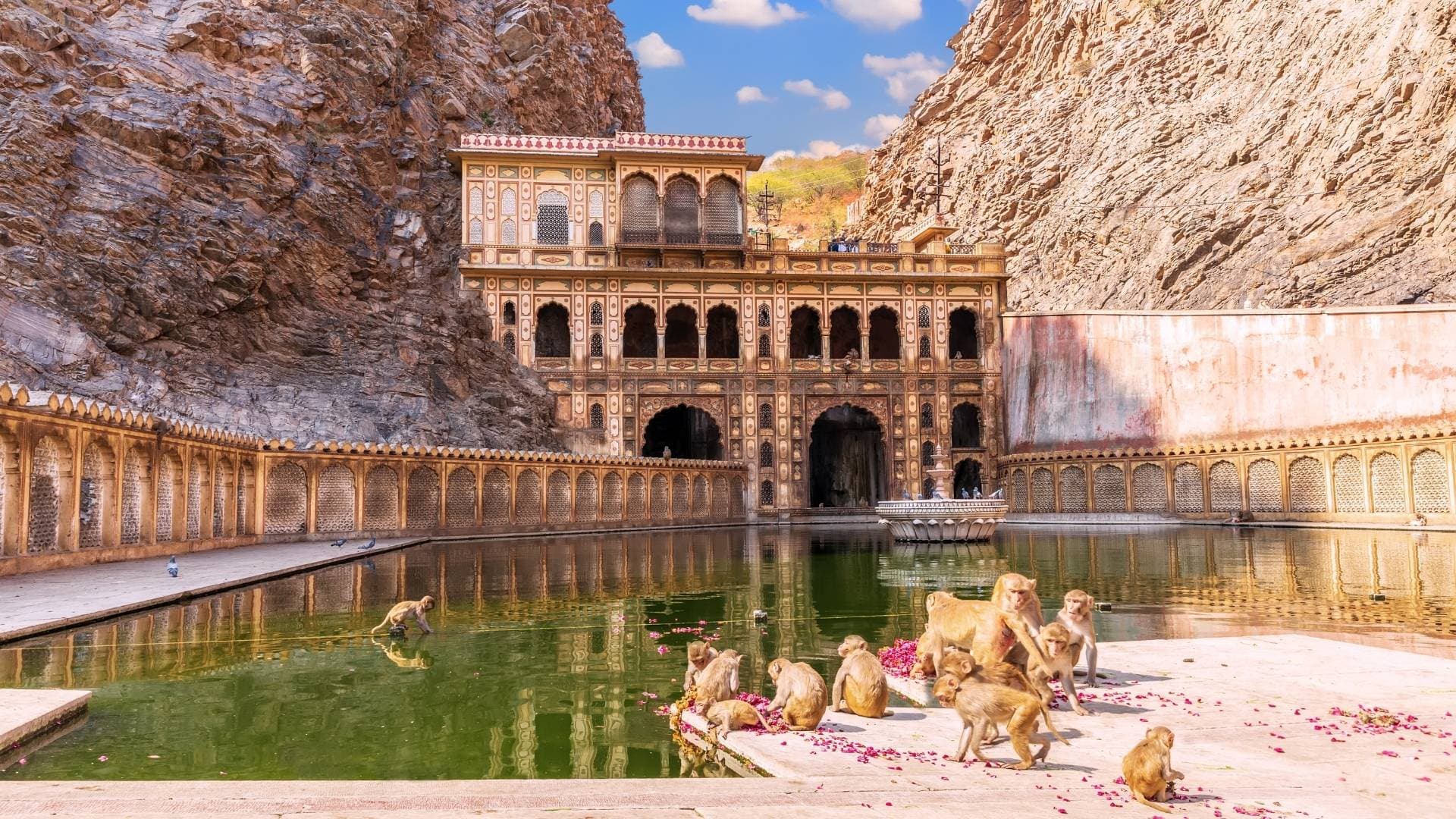
Begin your second morning at Galta Ji, nestled in the Aravalli Hills just outside the city center. Known as the Monkey Temple, it’s a space where nature and faith coexist. Pilgrims bathe in sacred pools, their ripples breaking reflections of the faded temple walls. Troops of macaques leap from ledges and dart across pathways, giving the scene a sense of unscripted chaos. Unlike Jaipur’s polished palaces, Galta Ji is raw and alive; it is a reminder that spirituality here isn’t confined to silence, but thrives in noise, laughter, and everyday devotion.
By midday, head north to Amber Fort, the grand crescendo of Jaipur’s architecture. Rising above Maota Lake, the fort looks different depending on the hour — golden at noon, amber by dusk. Inside, you’ll find mirrored halls where candlelight once multiplied into infinite stars, courtyards that echo with footsteps, and stairways that lead to sweeping views of the hills. Every corner feels like a frame in a film, carefully composed yet alive with history. To walk Amber Fort is to feel small and immense at the same time as part of a narrative that has stretched across centuries.
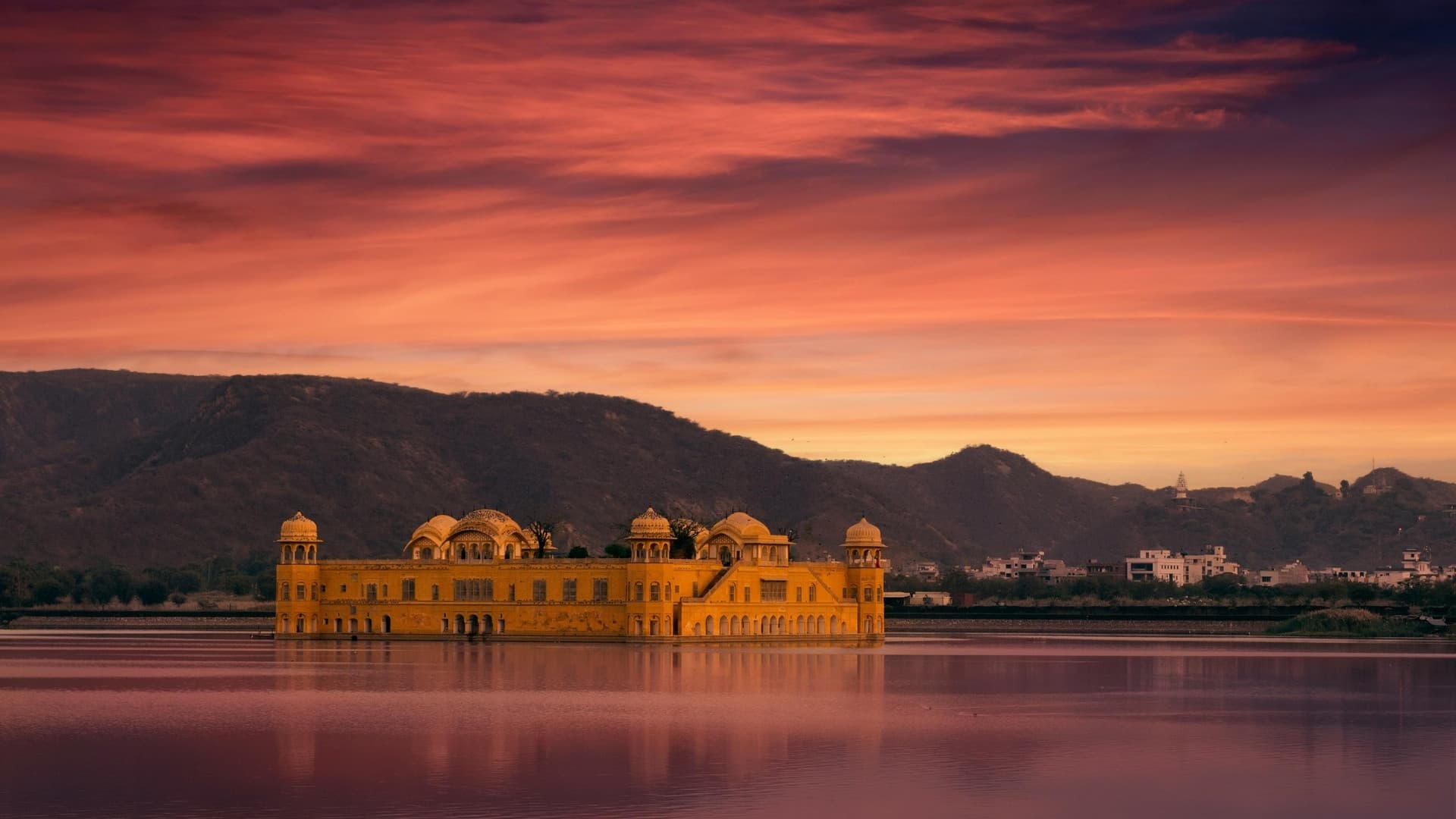
On your way back into the city, pause at Jal Mahal, the Water Palace. Floating serenely in Man Sagar Lake, only its upper floors visible, it feels almost like an apparition. At sunset, the domes glow against still waters, the palace’s reflection trembling with the slightest breeze. Street vendors line the promenade, selling roasted corn and trinkets, adding an everyday warmth to the ethereal scene. It’s the perfect final frame: serene, symmetrical, and unforgettable.
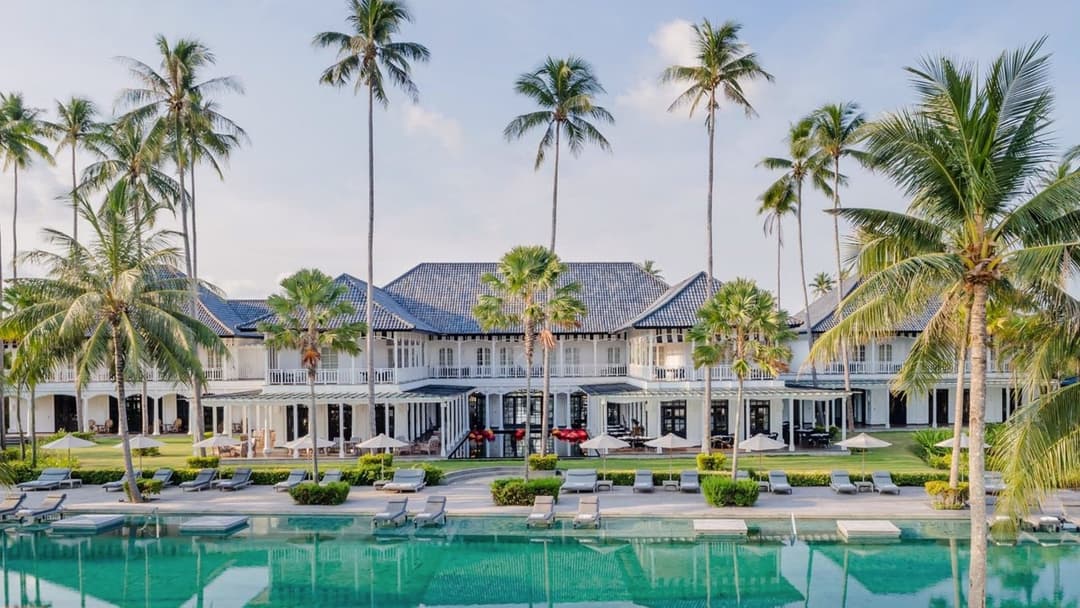
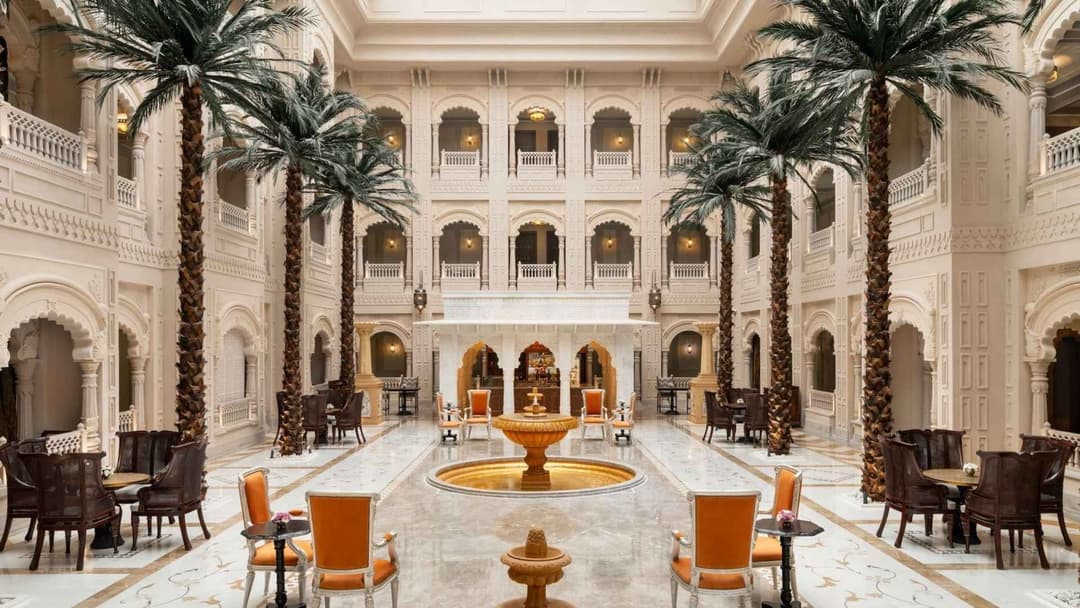
As evening falls, retreat to Raffles Jaipur. Unlike the day’s bustling streets, the hotel offers silence layered with luxury. Whether you end the day with a quiet dip in the pool, a spa treatment scented with jasmine, or simply tea in the courtyard, it’s a fitting end to your Wes Anderson India experience.
Here, you’re not just ending a journey, but letting the city’s palette settle into memory — pastel pinks, golden ambers, and the silver shimmer of lakes at dusk.
Jaipur is vast, and without careful planning, it’s easy to lose hours in traffic or double back unnecessarily. This route is designed for flow: Hawa Mahal, City Palace, and Jantar Mantar form a compact cluster in the heart of the old city, perfect for a half-day walk. Patrika Gate sits just south, a natural stop before returning to the hotel. Day two begins outward, with Galta Ji toward the east and Amber Fort further north, before looping back through Jal Mahal on the way home. It’s efficient, but more importantly, it feels like a story — building from delicate openings to grand closure, ending with reflective calm.
A weekend in Jaipur could be chaotic, but when framed deliberately, it becomes cinematic. And like any great film, it’s not just about what you see, rather it’s about what you carry after the credits roll.